In a report titled “The Foam Fire Extinguisher Market: Trends, Challenges, and Breakthroughs” published in U.S. media, it is stated that the foam fire extinguisher market is growing by approximately 10% annually and is forecasted to grow by around 13.4% per year from 2024 to 2031.
The fire extinguisher market has never been as dynamic as it has been in recent years, with consecutive double-digit growth rates. Especially, the foam fire extinguisher market is steadily expanding, growing by at least 10% per year over the past several years. This growth is driven by government support in various countries, along with an increasing awareness among the public about the importance of fire safety for themselves, their families, and society. Additionally, policies that support businesses, workplaces, and households in equipping fire safety tools, especially fire extinguishers, are playing a significant role. These extinguishers are cost-effective and highly efficient for fire protection.

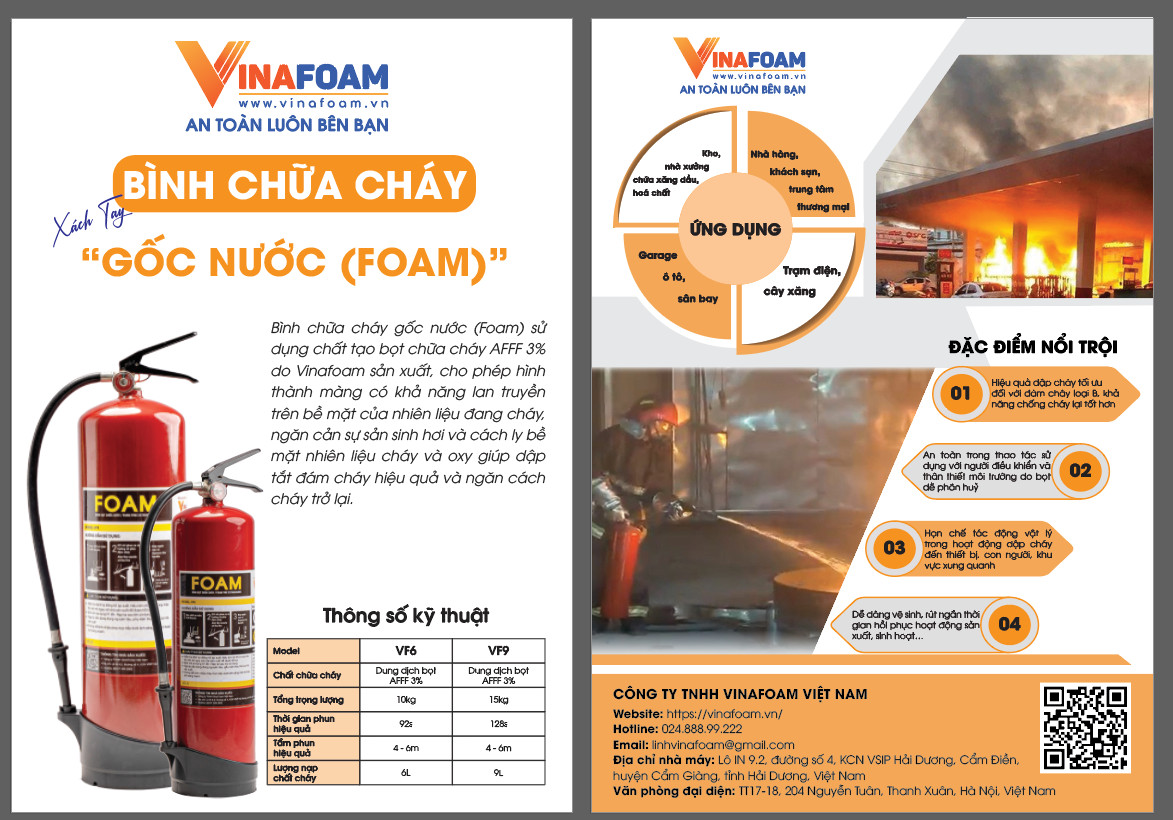
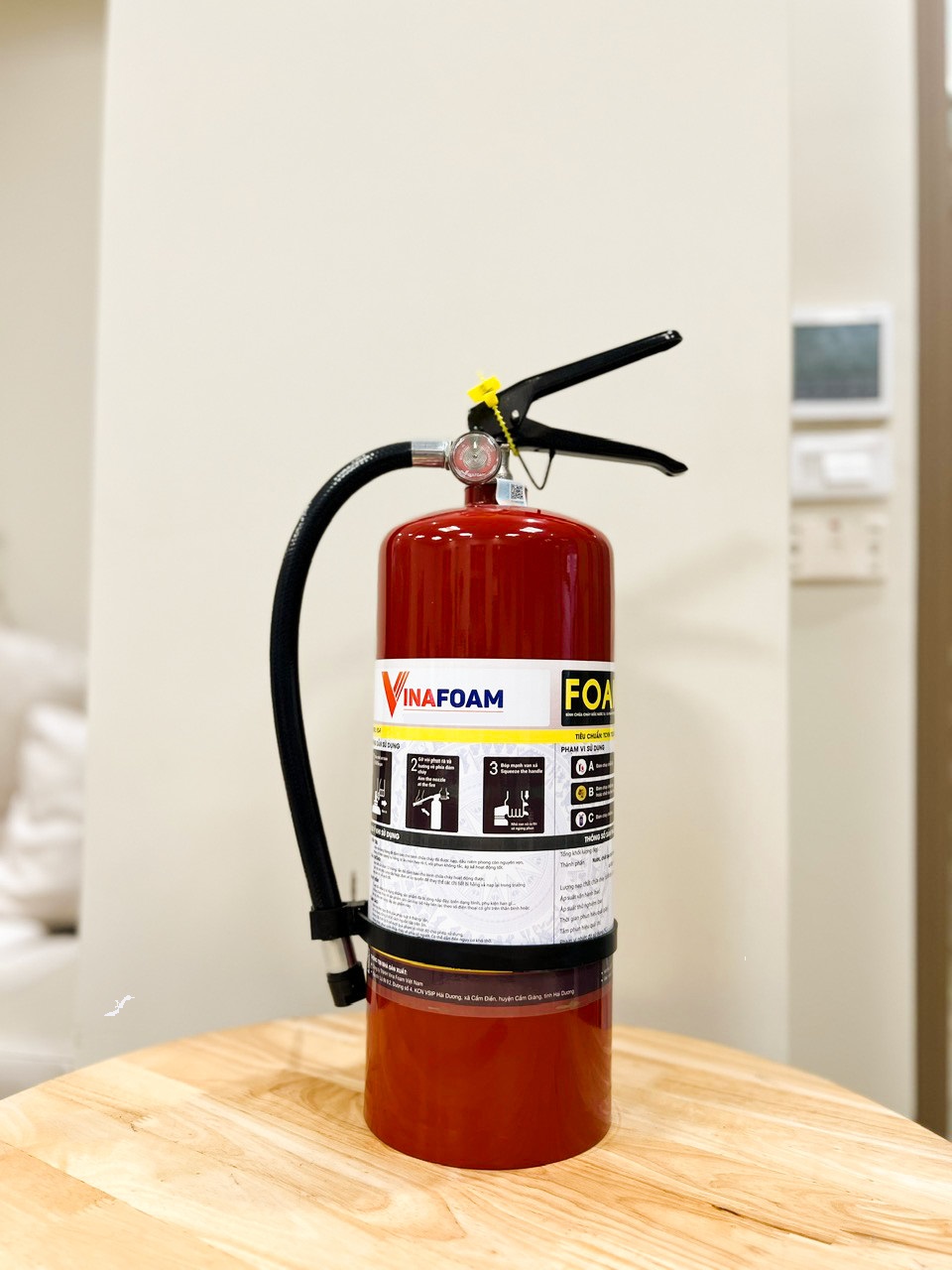
Let’s take a moment to understand foam fire extinguishers and their applications. Foam fire extinguishers are multi-purpose devices suitable for extinguishing Class A solid fires and Class B liquid fires. Foam extinguishers use a firefighting foam agent, a blend of perfluorinated surface-active agents and hydrocarbons. This allows the formation of a water film that spreads over the burning fuel surface, preventing vapor formation and sealing the surface from oxygen, effectively extinguishing the fire and preventing re-ignition.

In recent times, we have seen continuous fire incidents not only in Vietnam but around the world, with increasing frequency, scale, and destructive power. In modern life, with the rapid industrial development, fires are occurring with more complex scenarios, newer types of combustible materials, and particularly more frequent fires caused by batteries. This has created new challenges for fire safety, as common CO2 extinguishers are no longer as effective for industrial-standard fires. Even in high-rise buildings and densely populated areas, small living environments make CO2 fire extinguishers inconvenient and sometimes dangerous for users, causing unwanted effects like cold burns, suffocation, or even explosions when CO2 is sprayed on magnesium fires.

Furthermore, in developed countries such as the U.S., Australia, South Korea, and Japan, strict standards and regulations have been set for equipping fire safety devices and systems for households, offices, buildings, and especially industrial production areas. These countries are gradually replacing older CO2 and powder fire extinguishing systems with foam-based systems. Some countries have even drafted laws to make foam extinguishers mandatory for all businesses and organizations, especially those dealing with flammable liquids like gasoline, oil, and other chemicals. Naturally, this is because of the superior effectiveness of foam in handling gasoline, metal, and other typical fires.
Reports from global market research companies confirm that the foam fire extinguisher market is experiencing significant growth in various regions. North America, especially the U.S. and Canada, is expected to lead the market, holding about 35% of the market share due to strict safety regulations. Europe follows closely behind, with Germany, France, and the UK contributing about 30% of the market share, as industries prioritize fire safety. The Asia-Pacific region, especially China and India, is witnessing rapid adoption, targeting 25% market share as urbanization increases. Latin America and the Middle East & Africa are emerging markets, accounting for about 10%, with Turkey and Brazil showing notable development.
The reports also predict that the foam fire extinguisher market will grow at an annual rate of 13.4% from 2024 to 2031 and will experience a breakthrough growth rate of 21-24% per year from 2031 to 2040.


 Tiếng Việt